
Reviewed · BALINESE COOKING CLASSES
Traditional Tempeh Making & Cooking Balinese Cuisine
Tempeh is the star here, not a side note. You learn how this Indonesian staple is made from scratch, then use it in several dishes before sitting down to a seven-dish lunch in the garden of a local home. Ayu and Ngurah lead the class, which keeps the focus on food, family, and practical cooking.
I like the small-group format, with no more than 10 people, and the way the class explains tempeh instead of treating it as a trendy meat substitute. I also like the flexible menu: you can include chicken and tuna, or keep the meal fully vegan. The main consideration is the meeting point in Denpasar, even though the experience is marketed for visitors staying around Seminyak, so you need to plan your own way there.
Key points to know before booking
- Tempeh takes center stage: Learn how this Java-born food is produced, including its place in Indonesian cooking.
- Seven dishes make up lunch: You cook several tempeh recipes, Sayur Urab, and other Balinese dishes before eating together.
- Ayu and Ngurah host the class: Their teaching includes the history of tempeh and a guide for making it at home.
- The menu can suit vegans: Chicken and tuna are optional, while tea, coffee, water, and a light snack are included.
- The class runs from 9:30 a.m. to 12:30 p.m.: It ends with lunch at the same local home where the cooking takes place.
- Small groups keep it personal: The maximum is 10 people, and a private class can be arranged on request.
Why tempeh makes this Bali cooking class different
Many cooking classes in Bali focus on a broad sweep of familiar dishes. This one has a clearer purpose: it uses tempeh as the thread running through the morning.
Tempeh is an Indonesian food made from fermented soybeans. The class presents it as a traditional food from Java, known in Indonesia since the 1600s, and explains why it has remained useful across different types of cooking. It is filling, protein-rich, and adaptable, which makes it more than a convenient vegan ingredient.
That focus gives the class a practical edge. You are not only learning what tempeh tastes like after it has been fried or mixed into a dish. You also see the making process and gain a better sense of how the ingredient fits into Indonesian food culture.
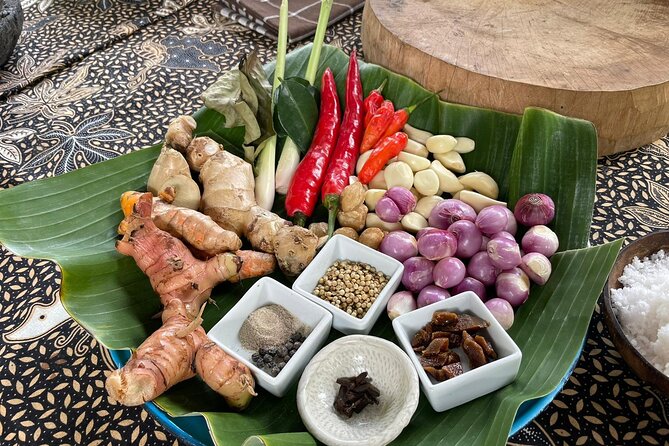
Ayu and Ngurah also explain the spices used in Balinese cooking. The class is a good choice if you want to understand how Indonesian food gets its character from seasoning, coconut, vegetables, and fresh plant-based ingredients rather than relying on one heavy sauce.
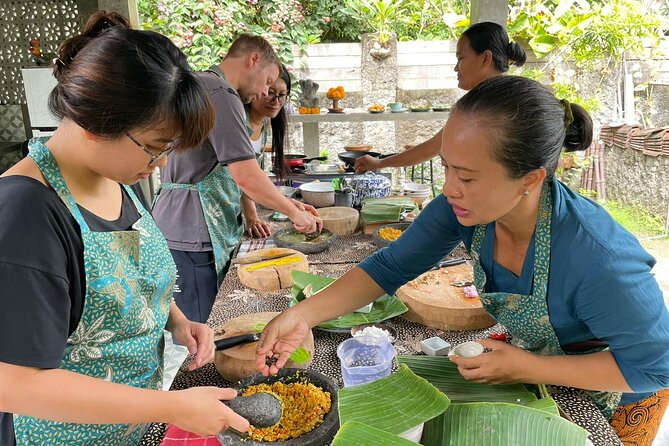
You should not expect a formal culinary school. The appeal is the chance to cook in an open-air kitchen studio at a cozy local home, with instruction built around a shared meal. That setting may feel less polished than a commercial cooking venue, but it gives the morning a more personal quality.
More Balinese cooking classes:
- Balinese Cooking Class in Seminyak
★ 5.0 · 281 reviews - Nia Bali Seminyak Cooking Class
★ 5.0 · 127 reviews - Cooking class in the comfort of your own personal villa. Yes, I’ll come to you!
★ 5.0 · 80 reviews
Starting at 9:30 a.m. in Denpasar
The class starts at 9:30 a.m. and finishes around 12:30 p.m. The listed meeting point is Canang Sari Homestay, on Gg. Kaswari No. 6, Dangin Puri Kaja, in North Denpasar. The activity ends back at that meeting point.
This location is worth checking carefully before you book. The experience is associated with Seminyak, but the stated start point is in Denpasar. The information provided does not include hotel pickup or transport, so you should arrange your own way to Canang Sari Homestay and allow enough time to arrive by 9:30.
The morning schedule works well for a cooking class. You begin early enough to prepare lunch without rushing, and the class finishes around midday. If you have afternoon plans, the three-hour format leaves much of the day free, though you should allow extra time for getting back from Denpasar.
The group limit is 10 people. That is small enough for Ayu and Ngurah to give individual help, while still allowing the meal to feel social. If you prefer one-to-one attention or are celebrating a special occasion, a private class is available on request.
Learning how tempeh is made from scratch
The tempeh lesson is the most distinctive part of the morning. You learn about its origins and follow the basic process rather than simply opening a packet and cooking with it.
The information provided does not list each technical stage in detail, so you should think of this as an introduction rather than a specialist fermentation workshop. The useful part is seeing how a food that may be familiar from restaurant menus becomes a central ingredient in Indonesian home cooking.
Ayu and Ngurah also provide a guide for making tempeh at home. That is a welcome touch because it gives the class value after you leave Bali. You may need to source the right ingredients and conditions yourself, but you leave with more than a memory of lunch.
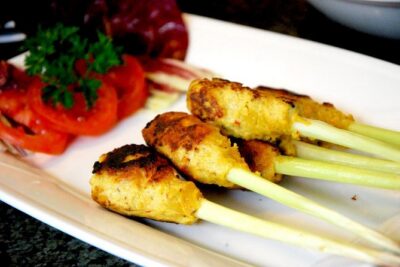
The cooking also shows tempeh in different forms. One especially interesting dish is tempeh fritter, which a Japanese participant found easy to imagine adapting at home. This is the sort of recipe that can be useful beyond Bali because it offers a simple way to change tempeh’s texture and flavor.
If you already cook with tempeh, the class may be most useful for the Indonesian methods and spice combinations. If tempeh is new to you, the morning provides a gentle introduction without asking you to commit to a fully plant-based diet.
Cooking with Bali’s spices and fresh ingredients
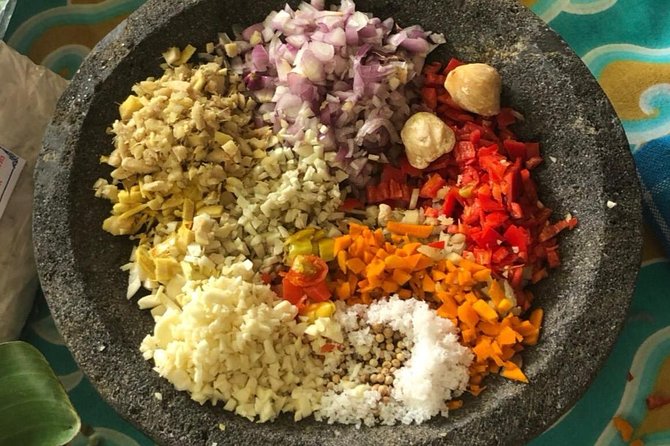
After the tempeh lesson, you move into the cooking portion of the class. The emphasis is on fresh, plant-based ingredients and traditional Indonesian recipes prepared from scratch.
You learn about the spices used in Balinese cooking, though the supplied information does not name every spice. That means you should expect a broad lesson in local seasoning rather than a fixed list of ingredients to take home.
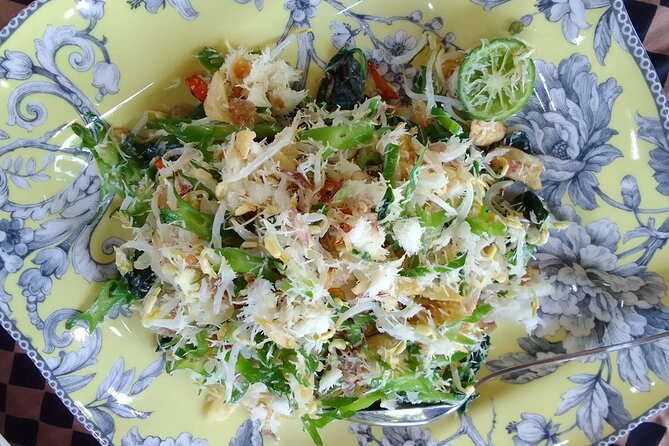
One named dish is Sayur Urab, a vegetable preparation made with greens and beans mixed with grilled grated coconut. It offers a useful contrast to fried tempeh dishes. The vegetables bring freshness, while the grilled coconut adds texture and a nutty, smoky note.
The menu also includes several tempeh-based dishes and other local recipes. Chicken and tuna may be added for those who want them, but they can be skipped if you are vegan. This makes the class more flexible than a fixed menu, especially for a mixed group where some people eat animal products and others do not.
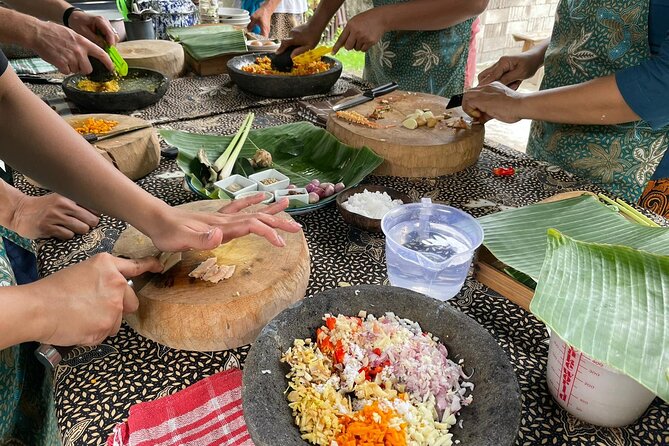
The seven-dish lunch is prepared as a group effort. You should expect to take part in the process, not simply watch Ayu and Ngurah cook. The small group helps here because you have a better chance to see what is happening and ask for clarification.
The class is especially suitable for people who want to cook Indonesian food at home. You get the chance to see how several dishes fit together as a meal, rather than learning one recipe in isolation.
A completely different sort of day, still an easy run from the beach:
- Bali Full-Day Traditional Village Sightseeing Trip All Inclusive
★ 5.0 · 3,069 reviews - Experts Bali Driver : Best Bali Private Driver for Tour in Bali
★ 5.0 · 1,339 reviews - Bali Hai Sunset Dinner Cruise
★ 5.0 · 1,173 reviews - Private Arrival Transfer: Bali Airport to Hotel
★ 4.5 · 739 reviews
Sharing lunch in a local garden
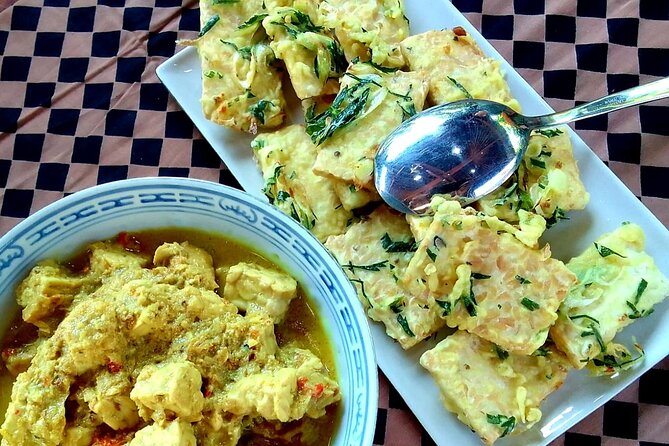
The class ends with everyone eating the food they prepared in the garden of the home. This changes the feel of the experience from a lesson into a shared meal.
There is a family atmosphere, with the garden providing a relaxed place to sit and enjoy the results. You are not being rushed out after the final cooking task. Instead, the meal gives you time to taste the dishes together and talk with your hosts.
The lunch includes seven dishes, with tempeh appearing in several preparations. Tea, coffee, water, and a light snack are included during the class. The description does not specify the exact drink choices or snack, so do not book this expecting a full beverage package.
The meal setting is one of the class’s strongest features. You get a closer look at everyday hospitality than you would from a restaurant-based cooking lesson. At the same time, a local home setting means you should come ready for a simple, informal environment rather than a highly designed venue.
A shared lunch also helps you judge the recipes properly. You can compare the dishes, decide which tempeh preparation you prefer, and make notes about what you would try at home. If you are vegan, the menu can remain plant-based by leaving out chicken and tuna.
What the hosts add to the experience
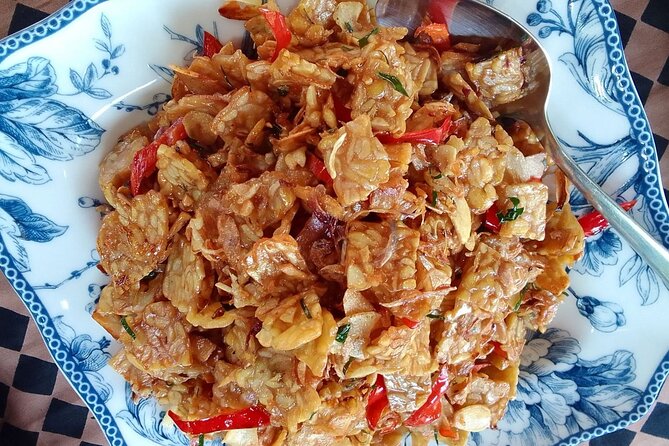
Ayu is described as especially passionate about cooking and careful in her teaching. That matters in a hands-on class because clear explanations can make the difference between simply following instructions and understanding why a dish works.
Ngurah also hosts the experience, and together they bring a personal, conversational quality to the morning. Their role is not limited to demonstrating recipes. They explain tempeh’s place in Indonesian food and guide you through the steps in a way that suits first-time cooks.
The strongest praise centers on the hosts’ hospitality, cooking ability, and care in explaining each stage. One participant described this as one of the best food experiences of a Bali stay, while another valued the history lesson as much as the recipes. Those comments point to a class that works because of the teaching, not just the menu.
The provided information does not say whether the class is taught in a particular language, so you may want to confirm that if language support is important to you. The host names and the small class size are clear, however, and they make this feel more personal than a large group demonstration.
Is $39 a good value?
At $39 per person, the class is reasonably priced for a three-hour experience that includes instruction, ingredients, drinks, a light snack, and a seven-dish lunch.
The value is strongest if you care about more than eating. You receive a tempeh-making lesson, an introduction to Indonesian spices, hands-on cooking, and a meal in a local home. The written guide for making tempeh at home adds lasting value, especially if you are interested in plant-based cooking.
If you mainly want a large meal or a quick food demonstration, you may find the price less compelling. The class is built around participation, so its value depends on your willingness to cook, listen, and take part.
A private class is available if requested, but the supplied information does not state the extra cost. Ask before booking if you want an exclusive session. For most people, the shared small-group format should provide a good balance of social contact and personal instruction.
The class is also a good deal for mixed dietary groups. Meat eaters can include chicken and tuna, while vegans can skip them and still receive a complete meal based on tempeh, vegetables, coconut, and other plant-based ingredients.
Who should book this experience?
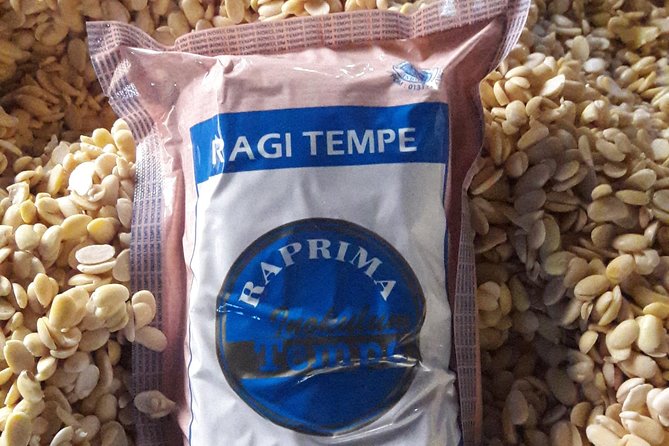
I would recommend this class to anyone curious about Indonesian food beyond restaurant versions of nasi goreng and satay. It is particularly useful if you want to understand tempeh as a traditional food rather than a modern health-food trend.
It suits:
- Vegans and vegetarians, because the menu can omit chicken and tuna.
- Home cooks, because you receive recipes, a tempeh-making guide, and practical spice ideas.
- Food-focused visitors, who prefer a local meal over a simple sightseeing stop.
- Small groups and couples, who want a more personal class.
- People new to tempeh, who want to try it in several preparations.
- Mixed-diet groups, since animal products are optional.
You may want to choose another activity if you need hotel pickup, a fixed location in central Seminyak, or a fully specified menu before booking. The meeting point is in Denpasar, and the class description does not provide transport details or a complete dish-by-dish menu.
The weather policy also matters. The experience requires good weather, and if conditions force a cancellation, you are offered another date or a full refund. A minimum number of participants is also required, so a cancellation is possible if that minimum is not met. Free cancellation is available up to 24 hours before the start time.
My verdict on the Balinese tempeh class
You should book this class if you want a hands-on food experience with a clear local focus. The tempeh lesson gives it a point of difference, while the seven-dish lunch and garden setting make the morning feel generous for the price.
I especially like the combination of practical cooking and cultural context. You learn where tempeh comes from, how it is used, and how to prepare it alongside vegetables, coconut, and Indonesian seasonings. Ayu and Ngurah add the personal touch that helps a small class work well.
Check the Denpasar meeting point before committing, and confirm the private-class price if that option interests you. If you are comfortable making your own way there, this is a strong choice for an authentic, food-centered morning in Bali.
FAQ
How long does the tempeh cooking class last?
The class lasts about three hours, from 9:30 a.m. until approximately 12:30 p.m. Lunch is included at the end.
Where does the class start and finish?
It starts at Canang Sari Homestay, Gg. Kaswari No. 6, Dangin Puri Kaja, North Denpasar, Bali. The activity ends back at the same meeting point.
Is the class suitable for vegans?
Yes. The class is vegan-friendly, and chicken and tuna can be skipped. The menu includes tempeh, vegetables, coconut, and other plant-based ingredients.
How many people can join the class?
The activity has a maximum of 10 participants. A private group is also available on request.
What food and drinks are included?
You prepare and eat seven Balinese Indonesian dishes. Tea, coffee, water, and a light snack are provided during the class.
What will I learn about tempeh?
You learn about tempeh’s history, its importance in Indonesian cooking, and the basic process of making it from scratch. A guide for making tempeh at home is also provided.
Can I cancel for a full refund?
Yes. You can cancel at least 24 hours before the experience start time for a full refund. Cancellations or changes made less than 24 hours before the start time are not refunded or accepted.
Newest Bali write-ups
- Best of North Bali: Banyumala Waterfall, Handara Gate and Temple★ 5.0 · 4 reviews
- Surf lesson | Energy surfschool krui★ 5.0 · 3 reviews
- West Nusa Penida Island Snorkeling Tour – From Bali Island★ 4.0 · 5 reviews
- Uluwatu tour & Balinese kecak dance★ 5.0 · 3 reviews
- Sharing Mount Batur Sunrise Trekking And Natural Hot Spring★ 5.0 · 11 reviews
- Bali Parasailing Adventure, Jet Ski, Banana Boat , Donat Boat, with Transport★ 5.0 · 11 reviews
- Uluwatu Temple & Kecak Fire Dance Show (Include All Tickets)★ 4.5 · 5 reviews
- Bali’s Spiritual Pillars – Uluwatu Temple and Kecak Dance Tour★ 5.0 · 6 reviews
Balinese Cooking Classes, compared.
Cooking class in the comfort of your own personal villa. Yes, I’ll come to you!
Read our review →
Balinese Cooking Class & Tanah Lot Temple Visit – Private & All-Inclusive
Read our review →
Balinese Cooking Class at The Santai Umalas Kerobokan
Read our review →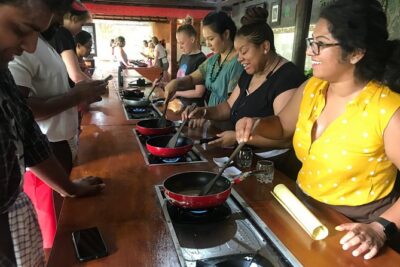
Bali Cooking Class Experience with All Inclusive
Read our review →
Private Javanese Cooking Class with Dotty in Tumbak Bayuh, Canggu
Read our review →Browse the lists this tour appears in