
Reviewed · BALINESE COOKING CLASSES
Balinese Cooking Class in Seminyak
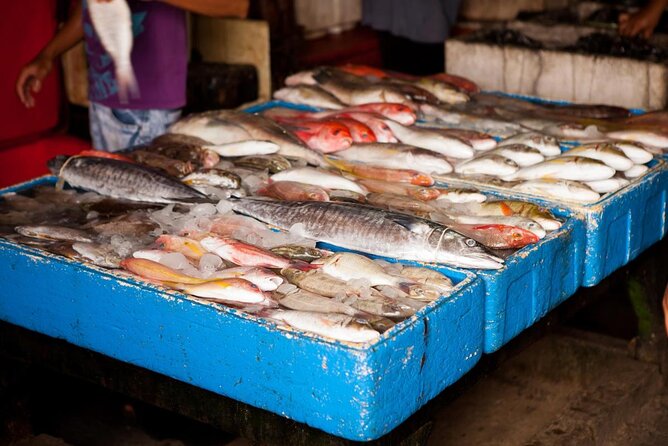
The best part of this Seminyak cooking class happens before the first knife hits the board: the optional Jimbaran fish market visit shows you how Balinese cooks choose fish, vegetables, herbs, and spices. Chef Putu can point out useful details, such as choosing fresh fish by the color and clarity of its eyes.
I like the calm setting at The Amala, the small maximum group of 10, and the chance to eat the three-course meal you prepare. I also like the practical extras: a personalized certificate and your apron to take home. The main consideration is that much of the class involves chopping and preparation, so it suits cooks who enjoy learning the basics more than people seeking a fast, hands-off show.
Key points to know before booking
- Jimbaran market option: Add the morning market visit to shop for fish, vegetables, herbs, and spices with the chef.
- Three menus: Choose one menu for the whole group, including two meat and seafood menus or a vegetarian menu.
- Two class times: The morning class begins at 11 a.m. after the market option, while the afternoon class begins at 4 p.m.
- A meal at the end: Sit down for the lunch or dinner you prepared, rather than simply watching a chef cook.
- Small-group format: The class accepts a maximum of 10 people and requires at least two participants.
- Useful keepsakes: You receive a certificate and keep the class apron.
Why this class is more than a cooking demonstration
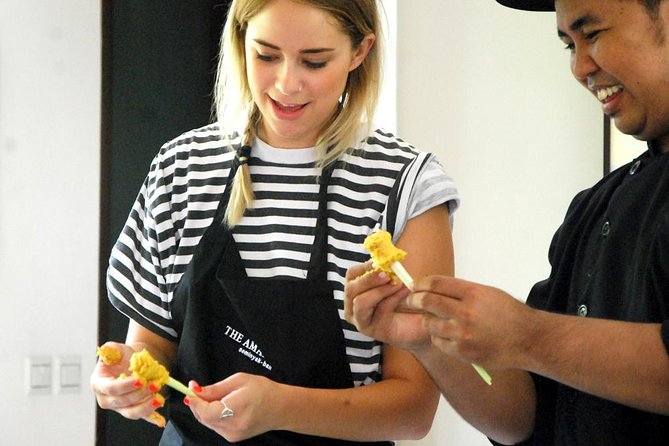
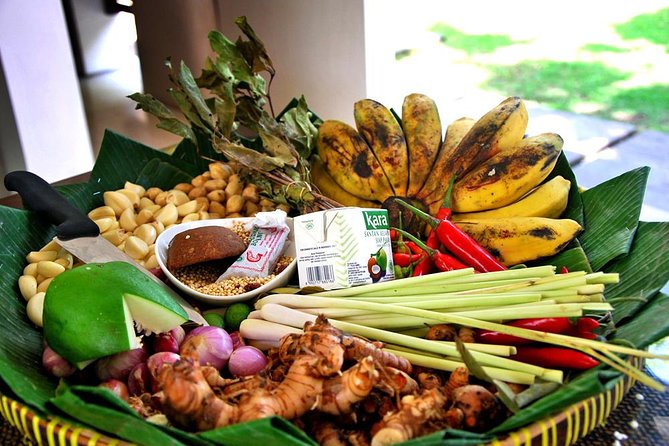
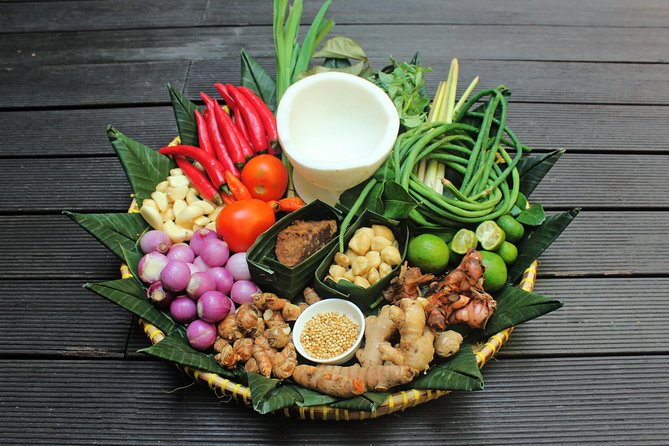
Balinese food is built from layers of fresh ingredients, spice pastes, coconut, herbs, seafood, and careful preparation. This class gives you a chance to handle those ingredients yourself, rather than watching a chef do all the work while you take pictures.
At The Amala, the chef first introduces the ingredients and equipment. You then prepare each dish under supervision. That structure is useful if you want to understand how the food comes together, especially the spice base used across several dishes.
Chef Putu and other members of the team are praised for explaining each step clearly and keeping the session friendly. Chef Evi and Manik have also led classes, and the teaching style appears to be hands-on without being intimidating. You can ask about ingredients that may be difficult to find at home and receive practical suggestions for substitutions.
The format is not a professional kitchen course. You will not spend three hours mastering advanced restaurant techniques. Instead, you will chop, mix, steam, grill, and prepare a meal with close guidance. That makes the class suitable for beginners, couples, families with older children, and anyone who wants a relaxed introduction to Balinese home cooking.
More Balinese cooking classes:
- Nia Bali Seminyak Cooking Class
★ 5.0 · 127 reviews - Cooking class in the comfort of your own personal villa. Yes, I’ll come to you!
★ 5.0 · 80 reviews - Balinese Cooking Class & Tanah Lot Temple Visit – Private & All-Inclusive
★ 5.0 · 24 reviews
The Jimbaran market visit starts the day well
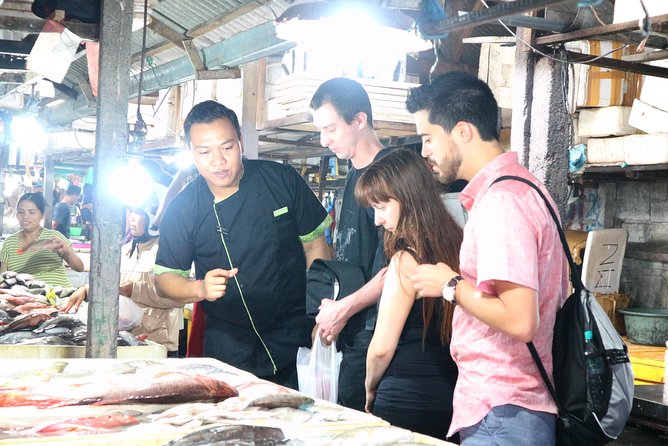
The optional market trip begins at about 9:30 a.m. and is available with the morning class only. You go with the chef to Jimbaran fresh fish market to select ingredients for the meal, with the focus on seeing how local produce and seafood are chosen.
This is the most distinctive part of the experience. In a hotel kitchen, the ingredients simply appear on the table. At the market, you can see where the fish comes from and learn what to look for before buying it. The chef can explain the different fish on offer and help you select something fresh enough for the class.
The market visit can also include vegetables, herbs, and spices. One class group visited a nearby fruit and vegetable market as well, which added useful context to the cooking session. You get a better sense of how common ingredients are sold and how Balinese cooks shop for a meal.
There are two important conditions. The market option requires at least two people on a booking. If you are booking alone, an additional fee of Rp100,000 net applies for the market visit. The class itself also requires a minimum of two participants, so check the booking details carefully if you are traveling solo.
I recommend adding the market visit if you can. It adds roughly an hour and gives the food a clear starting point. The afternoon class does not include this option, so choose the morning schedule if the market matters to you.
Preparing the three-course meal at The Amala
After the market visit, the morning class begins at 11 a.m. The afternoon session begins at 4 p.m. You meet the chef, get an introduction to the ingredients and equipment, and then start preparing the first dish at about 11:30 a.m. or 4:30 p.m.
The class is participatory. You take turns cutting ingredients and helping cook each dish. The chef supervises the work and explains how the ingredients are used. This is helpful for first-time cooks, though you should know that preparation and chopping make up a large part of the session.
The meal is prepared in stages, with the final dish completed around 1 p.m. for the morning class or 6 p.m. for the afternoon class. You then sit down to eat what you made. A dining area is prepared for the meal, and the setting at The Amala is one of the experience’s strong points.
Food is generally served as part of the class rather than as an additional restaurant meal. The portions are described as plentiful, and the chance to eat everything while it is still part of the lesson gives the class a satisfying finish. One minor point to keep in mind is that food may cool while the last preparations are being completed.
Choosing between the three menus
You choose one of three menus, and everyone in the class follows the same menu. This matters if you are booking with a group and have different tastes. Decide in advance which style of food appeals most to everyone.
Menu 1 includes:
- Lawar salad with green beans, fresh coconut, and chicken
- Tum ikan, fish steamed in a banana leaf
- Dadar gulung, a coconut pancake with palm sugar and shredded coconut
This menu gives you a good spread of Balinese techniques. You work with a fresh salad, a banana-leaf steamed dish, and a sweet coconut dessert. The banana leaf adds more than decoration: it helps hold the fish and gives the preparation a distinctly local character.
Menu 2 includes:
- Jukut gedang mekuah, young papaya soup with seafood
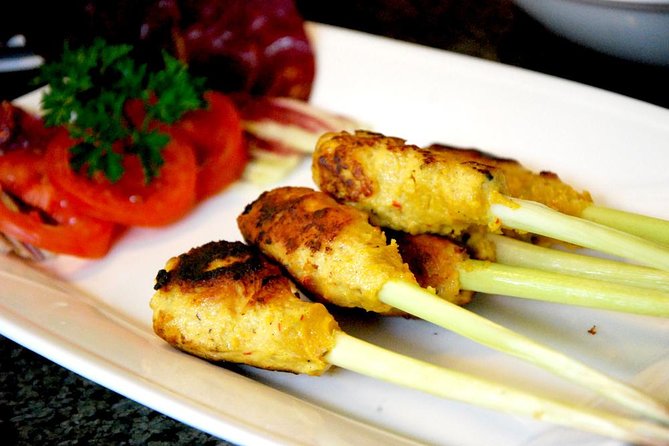
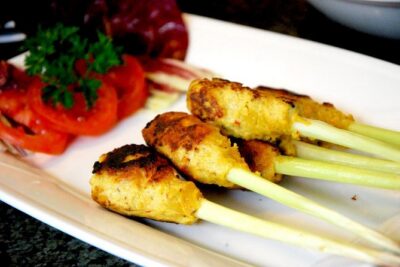
- Sate lilit ayam, chicken satay shaped around a lemongrass stick
- Steamed rice
- Godoh biu, Balinese fried banana
Menu 2 may appeal if you want a more substantial meal. The chicken satay uses lemongrass as the skewer, and the soup brings young papaya and seafood together in a broth. The fried banana provides a simple, comforting dessert.
The vegetarian menu includes:
- Gado-gado, vegetable salad with peanut dressing
- Pepes tahu, bean curd steamed in a banana leaf
- Bubur injin, Balinese black rice pudding
The vegetarian menu is not just a seafood-free version of the other choices. It is a separate three-course meal with its own ingredients and techniques. The bean curd prepared in banana leaf gives the menu a traditional cooking method, while the black rice pudding offers a dessert with a different texture and flavor from the coconut pancake or fried banana.
Because the menu is shared by all participants, ask your group to agree before booking. The supplied information does not list changes between menus, so you should not assume you can mix dishes from different options during the class.
A completely different sort of day, still an easy run from the beach:
- Bali Full-Day Traditional Village Sightseeing Trip All Inclusive
★ 5.0 · 3,069 reviews - Experts Bali Driver : Best Bali Private Driver for Tour in Bali
★ 5.0 · 1,339 reviews - Bali Hai Sunset Dinner Cruise
★ 5.0 · 1,173 reviews - Private Arrival Transfer: Bali Airport to Hotel
★ 4.5 · 739 reviews
What you learn from the chef
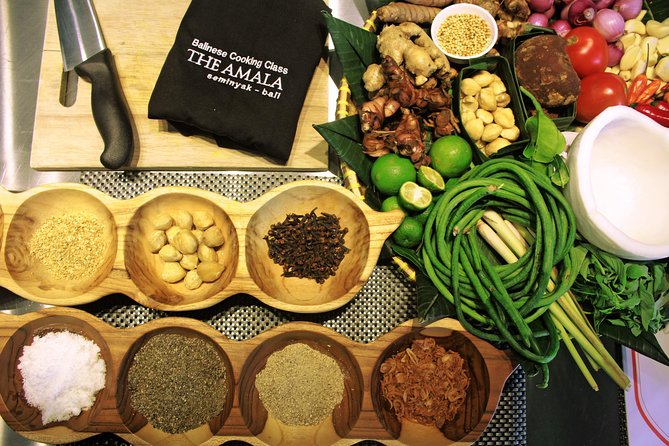
The main educational value is in the explanation of ingredients and spice combinations. The chef shows you how the dishes are assembled and gives advice on ingredients that may be hard to locate outside Bali.
This is particularly useful if you want to recreate the food at home. The dishes are approachable enough for a home kitchen, and the chef can suggest alternatives when a specific Balinese ingredient is unavailable. You also learn why fresh ingredients matter, from selecting fish at the market to handling vegetables and herbs.
Chef Putu has received especially strong praise for explaining the food clearly and answering questions. Other instructors, including Chef Evi, have also been described as patient and easy to follow. The teaching is active, but the pace is not presented as a formal culinary exam. You can take part without needing previous cooking experience.
The class also gives you a better feel for everyday Balinese flavors. You work with coconut, palm sugar, banana leaves, seafood, lemongrass, peanut dressing, young papaya, and black rice. Those ingredients help explain why Balinese cooking often tastes different from generic Indonesian food served outside the country.
The setting, group size, and atmosphere
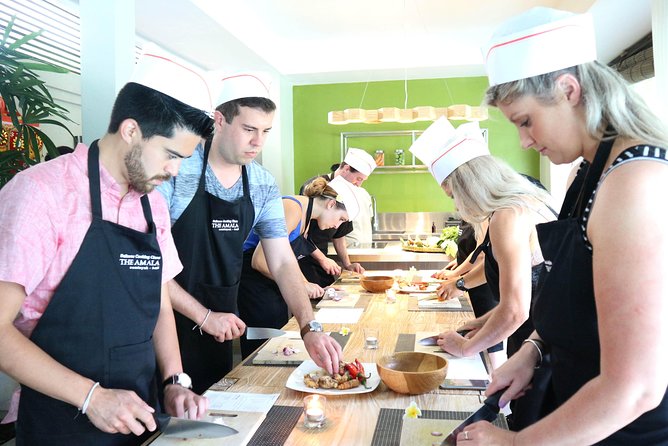
The class takes place at The Amala, a boutique retreat on Jalan Kunti I in Seminyak. The setting is described as calm and attractive, with an outdoor dining area used for the final meal. That setting makes a difference because the class is not only about food. You also get a comfortable place to sit, prepare ingredients, and eat.
The maximum group size is 10 people. Some sessions may be smaller, with one group described as having six participants. A small group gives you more room to take turns and ask questions, though the exact number can change by date.
The class is suitable for people aged 12 and older. It works well as a break from Seminyak’s shopping, beach time, and restaurant meals. The morning option is better if you want a full activity followed by lunch. The afternoon class is convenient if you prefer a slower morning and dinner at the end.
Hotel pickup and drop-off are included within the Seminyak area. The stated meeting point is The Amala Boutique Retreat, and the activity ends there. If you are staying outside Seminyak, confirm the transport arrangement before paying. One booking from Nusa Dua involved an extra transfer charge, so the included pickup should not be assumed to cover every Bali resort area.
Is the $66.67 price good value?
At $66.67 per person, this is not the cheapest way to eat in Bali. You can find a much less expensive meal in Seminyak. The price makes more sense when you count the three-hour lesson, the meal, the private round-trip transfer within Seminyak, the chef’s instruction, and the apron and certificate.
The market visit adds the most value for anyone interested in food culture. You see the buying process, learn how to choose ingredients, and then use some of them in the class. Without the market visit, the experience is a pleasant cooking lesson, but with it, the day has a stronger connection between market, kitchen, and table.
The value is also better for people who will use what they learn at home. If you only want a meal, book a restaurant. If you want to understand the ingredients and try the dishes yourself, the price is easier to justify.
The private transfer within Seminyak is useful, especially in hot weather or if you are carrying nothing but want a simple door-to-door start and finish. Pickup details should be confirmed if your hotel is outside the stated area.
What to bring and how to plan the day
Wear clothes that are comfortable for standing and food preparation. You receive an apron, but sensible shoes and clothing that can handle a little splashing or spice dust are still a good idea.
For the morning option, allow extra time if you add the market visit. The market begins around 9:30 a.m., followed by the class at 11 a.m. The afternoon schedule starts at 4 p.m. and does not include the market trip.
You do not need advanced cooking skills. The chef and staff guide you through the preparation, and the class has been used successfully by complete beginners. You should bring questions, especially if you want to cook the dishes at home or need ideas for replacing hard-to-find ingredients.
The minimum age is 12, and the minimum booking is two people. The experience offers mobile tickets and confirmation at booking. Free cancellation is available up to 24 hours before the start time. If poor weather forces cancellation, you can receive a different date or a full refund.
Who should book this Seminyak cooking class?
I would choose this class if you want to do more than eat Balinese food. It suits anyone curious about local ingredients, couples looking for a shared activity, families with teenagers, and home cooks who want recipes they can adapt after returning home.
The morning class with the market visit is the strongest version of the experience. It gives you a clearer sense of how the food begins and lets you see Jimbaran’s fish market with a chef who can explain what you are looking at.
The class may be less suitable if you want a fast-paced professional cooking lesson, a private menu designed just for your group, or a fully prepared feast with little participation. You will spend real time chopping and preparing food, and all participants follow the same menu.
Should you book it?
Yes, if you want a friendly, hands-on introduction to Balinese food in a comfortable Seminyak setting. The market visit, chef guidance, meal, apron, and certificate create a fuller experience than a simple cooking demonstration.
Book the morning option and add Jimbaran market if food is a major part of your Bali trip. Choose the afternoon class if you mainly want a relaxed three-course activity and dinner. Before booking, confirm the shared menu, pickup area, minimum two-person rule, and any extra transfer cost if you are staying outside Seminyak.
FAQ
Where does the Balinese cooking class take place?
The class takes place at The Amala Boutique Retreat, at Jl. Kunti I No. 108 in Seminyak, Bali. The activity ends back at the meeting point.
How long does the cooking class last?
The experience lasts about three hours. The morning class runs from around 11 a.m. to 1 p.m., while the afternoon class runs from around 4 p.m. to 6 p.m.
Is hotel pickup included?
Round-trip private transfer is included within the Seminyak area. Extra charges may apply for pickup outside that area.
Is the Jimbaran market visit included?
The Jimbaran fresh fish market visit is optional and available with the morning session only. It begins around 9:30 a.m.
Can one person book the market visit?
The market visit requires at least two people per booking. For one person, an additional charge of Rp100,000 net is required.
How many people can join the class?
The maximum group size is 10 people. The experience requires a minimum of two participants.
What menus are available?
You can choose Menu 1, Menu 2, or the vegetarian menu. The same menu is prepared by all participants in the class.
Is there a vegetarian option?
Yes. The vegetarian menu includes gado-gado, steamed bean curd in banana leaf, and Balinese black rice pudding.
What age is required to join?
The minimum age is 12 years.
Can I cancel for a refund?
You can cancel at least 24 hours before the experience for a full refund. Cancellations or changes made less than 24 hours before the start time are not accepted for a refund. If poor weather causes the activity to be canceled, you can receive a different date or a full refund.
More Workshops in Bali
- Canggu: Surfing lesson with ISA certified instructor
★ 5.0 · 102 reviews - The funniest private 2 hour surf lesson, Canggu
★ 5.0 · 70 reviews - Kuta Seminyak Scooter Lessons
★ 5.0 · 40 reviews - Bali Seminyak Silver Class Activity and Take Your Own Creation
★ 5.0 · 37 reviews
Newest Bali write-ups
- Best of North Bali: Banyumala Waterfall, Handara Gate and Temple★ 5.0 · 4 reviews
- Surf lesson | Energy surfschool krui★ 5.0 · 3 reviews
- West Nusa Penida Island Snorkeling Tour – From Bali Island★ 4.0 · 5 reviews
- Sharing Mount Batur Sunrise Trekking And Natural Hot Spring★ 5.0 · 11 reviews
- Bali Parasailing Adventure, Jet Ski, Banana Boat , Donat Boat, with Transport★ 5.0 · 11 reviews
- Uluwatu tour & Balinese kecak dance★ 5.0 · 3 reviews
- Bali’s Spiritual Pillars – Uluwatu Temple and Kecak Dance Tour★ 5.0 · 6 reviews
- Uluwatu Temple & Kecak Fire Dance Show (Include All Tickets)★ 4.5 · 5 reviews
Balinese Cooking Classes, compared.
Cooking class in the comfort of your own personal villa. Yes, I’ll come to you!
Read our review →
Balinese Cooking Class & Tanah Lot Temple Visit – Private & All-Inclusive
Read our review →
Balinese Cooking Class at The Santai Umalas Kerobokan
Read our review →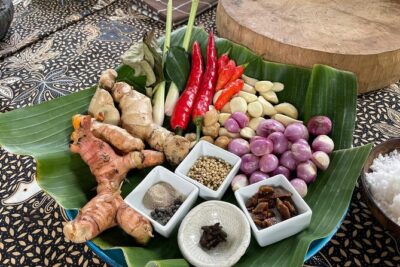
Traditional Tempeh Making & Cooking Balinese Cuisine
Read our review →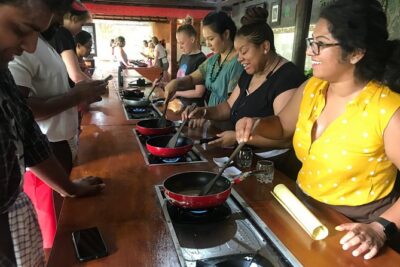
Bali Cooking Class Experience with All Inclusive
Read our review →
Private Javanese Cooking Class with Dotty in Tumbak Bayuh, Canggu
Read our review →Browse the lists this tour appears in