
Reviewed · DENPASAR CITY AND STREET FOOD TOURS
Taste & Explore Bali: Denpasar Street Food & Historic Sites
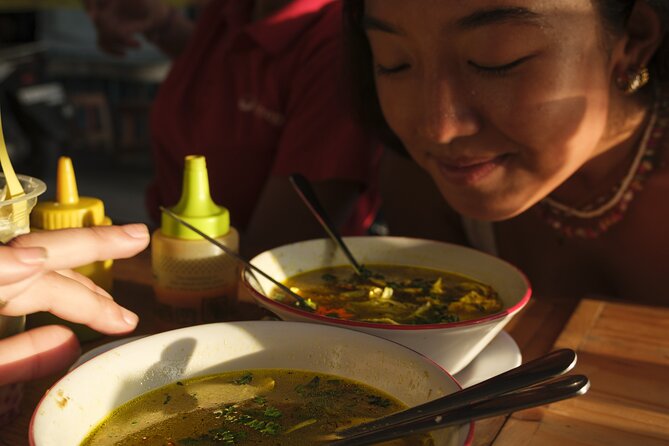
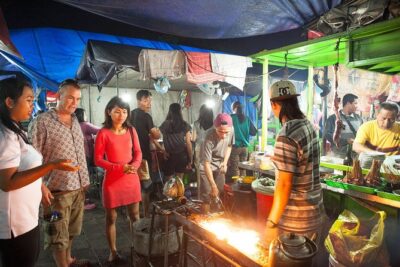
Denpasar’s best meal may not come with a polished dining room. This three-hour evening walk takes you from a Hindu temple and historic square to local food stalls serving Babi Guling, Bakso, Jaje Bali, and Indonesian coffee. The real point is not just eating. It is seeing how food, ritual, trade, and Bali’s modern city life fit together.
I like the small maximum of 12 people, which gives guides such as Putra, Irfan, Lena, and Srix room to explain dishes and local customs. I also like that the route supports four to six family-run food stalls instead of steering you toward a single tourist restaurant.
The main consideration is food flexibility. This is a pork-and-meat-centered tour with traditional cakes and soup, and it cannot accommodate vegetarian, vegan, or gluten-free diets. Young children under six are not allowed, and there are no children’s meals.
Key points to know before booking
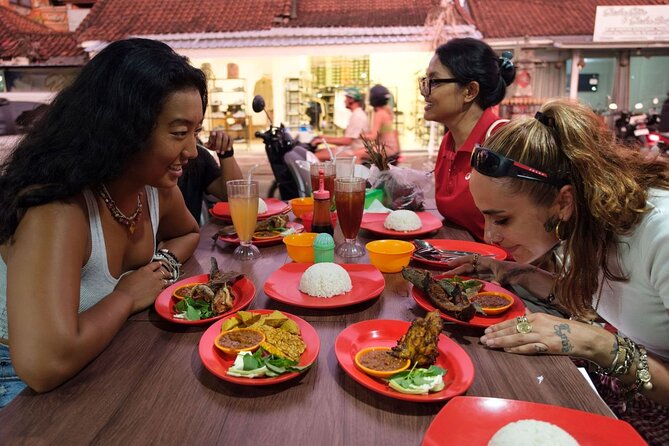
- Ceremonial Babi Guling: Try Bali’s famous roast pork, a dish often linked with ceremonies rather than everyday tourist meals.
- Central Denpasar on foot: Visit Pura Agung Jagatnatha, Puputan Square, Catur Muka, Jalan Gajah Mada, and Badung Market.
- Small group of 12: You get more time to ask questions and watch how food is chosen and served.
- Four to six local stalls: Your spending reaches several small vendors, not just one restaurant.
- Starts at 4pm: The timing lets you see Denpasar shift from afternoon activity toward evening food trade.
- Ends with coffee: Nadhi Heritage serves Indonesian Arabica coffee, hot or iced, at the end of the walk.
Why this Denpasar food walk feels different
Many Bali food outings stay close to Seminyak, Canggu, or Ubud. This one takes you to central Denpasar, where the setting feels more like an everyday city than a resort district. You begin beside an important Hindu temple, pass markers of Bali’s political past, and then eat your way through streets and markets.
That sequence matters. You are not simply handed a plate and told its name. You first see the religious and civic center of Denpasar, then learn how local food connects with ceremonies, family businesses, and market life.
At $45 per person, the tour is not the cheapest way to eat in Bali. You could buy individual dishes for less. The value comes from the guide, the planned tasting route, the cultural explanation, and the chance to try several foods without guessing what to order. Since the group is limited to 12, the price also buys a more personal format than a large bus-style excursion.
The experience has a 4.6 rating from 27 ratings, with particularly strong praise for the guides’ warmth, food explanations, and ability to make the route easy to follow. That is useful here because Denpasar’s food stalls can be unfamiliar if you do not speak Indonesian or know which dishes to choose.
More Denpasar city and street food walks:
- Small-Group Denpasar Night Food Tour
★ 4.0 · 22 reviews - Bali Must-Try Food Tour (Denpasar)
★ 5.0 · 18 reviews - Well-Guided Local Textile Tour of Denpasar
★ 5.0 · 13 reviews
Starting at Pura Agung Jagatnatha
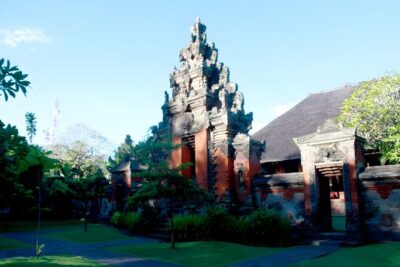
Meet at Pura Agung Jagatnatha on Jalan Surapati at 4pm. The temple is a calm place to begin, and the setting gives the tour a clear cultural anchor before the eating starts.
The temple is dedicated to Sanghyang Widi Wasa, the supreme god in Balinese Hindu belief. The tour description does not promise an extended temple ceremony or inside access, so you should think of this stop as a short introduction to Denpasar’s Hindu identity rather than a full religious visit.
You get about 15 minutes here. That is enough to look at the architecture, take in the atmosphere, and hear from your guide about the temple’s place in central Denpasar. Dress respectfully, as you would at any Balinese temple, and follow your guide’s instructions about where to stand or walk.
Starting at a temple also helps you understand why Babi Guling matters. The dish is not just roast pork served for pleasure. It has a strong connection with Balinese ceremonies, and learning that before tasting it adds meaning to the meal later.
Puputan Square and Bali’s resistance
From the temple, the route moves toward Puputan Square, a civic space tied to Bali’s resistance against colonial rule in 1906. The word puputan refers to a fight to the end, and your guide explains the event’s place in Balinese history.
You also see the symbolic 0 kilometer landmark, the point used as the center of Denpasar. It is a small detail, but a useful one. Rather than seeing the city as a loose collection of markets and roads, you begin to understand its civic center and how local history is marked in public spaces.
The stop is brief, so do not expect a full museum-style history lesson. Its value comes from the guide’s explanation and the contrast between a solemn historical setting and the food stops that follow. Denpasar is both a place of memory and a working city, and this walk lets you see both sides in one evening.
Catur Muka and the old city center
Patung Catur Muka, the four-faced statue, is one of the route’s most recognizable landmarks. The statue represents a four-faced Hindu deity and faces the main directions of the city.
This is a good photo stop, but the guide also points out colonial-era features nearby, including the Nederlandsch-Indië Sokkelklok. The clock and surrounding buildings give you a glimpse of the old administrative center of Denpasar.
You have about 15 minutes here. That is enough for photographs and context, though anyone hoping for a long architectural tour may find the stop short. I would pay attention to the street layout and the mix of monuments, shops, traffic, and older buildings. The setting tells you more about present-day Denpasar than a single isolated landmark could.
More food-led days in Bali:
- Bali Private Food Walking Tour With Locals: The 10 Tastings
★ 5.0 · 243 reviews - Bali Bites Food Tour with 15+ Tastings
★ 5.0 · 114 reviews - Seminyak Indonesian Food Tour
★ 3.5 · 7 reviews - Denpasar City Food Tour (Day Tour)
★ 4.0 · 5 reviews
Jalan Gajah Mada and the first major meal
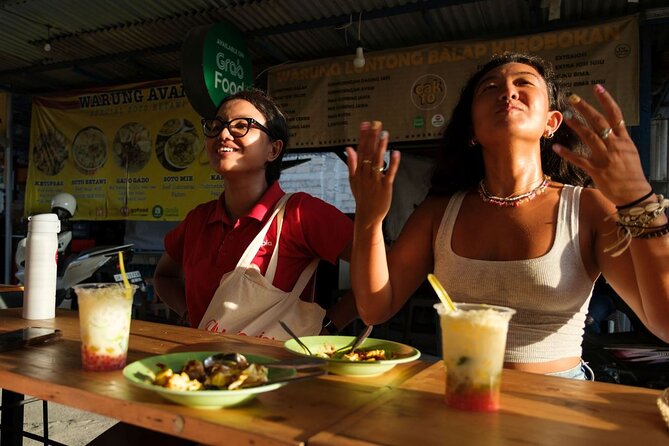
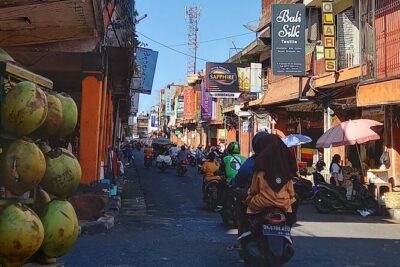
The route continues along Jalan Gajah Mada, one of central Denpasar’s heritage streets. Colonial-era buildings, local shops, and food businesses line the way. This is where the tour shifts from history toward a more direct look at daily city life.
You try two important Indonesian dishes: Babi Guling and Bakso. Babi Guling is Bali’s famous roasted pork, traditionally cooked on a rotisserie and seasoned before being served with accompanying items. It is often associated with ceremonies, so this is one of the more culturally meaningful tastings on the route.
Bakso is Indonesian meatball soup. It is comforting, filling, and widely loved across Indonesia. The soup gives you a useful contrast with Babi Guling: one dish is strongly tied to Balinese ritual and celebration, while the other is an everyday favorite found in many Indonesian settings.
The food is prepared and purchased locally at the places you visit. That does not mean every dish will suit every palate. Indonesian food can bring strong seasoning, unfamiliar textures, and ingredients you may not have tried before. The guide’s role is important here. Putra, Irfan, Lena, and Srix have each led versions of this experience, and the guide may explain how to choose food, how it is served, and why a dish matters.
You spend around 30 minutes on this part of the route. It is not a formal sit-down dinner, so wear comfortable shoes and expect to eat in a simple local setting.
Badung Market and Jaje Bali
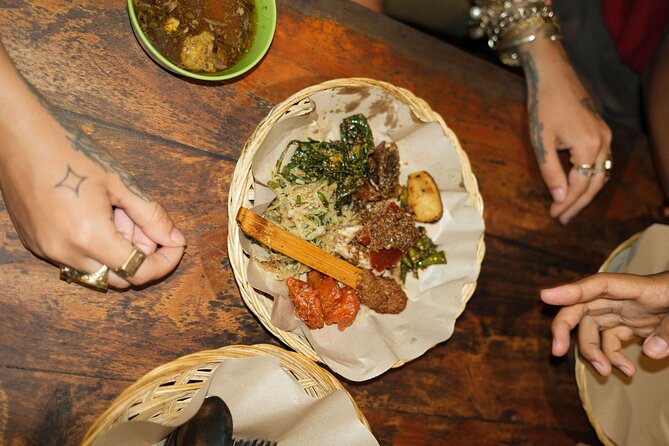
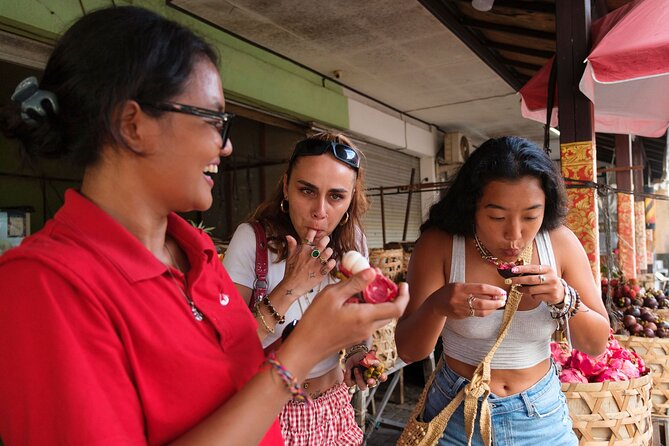
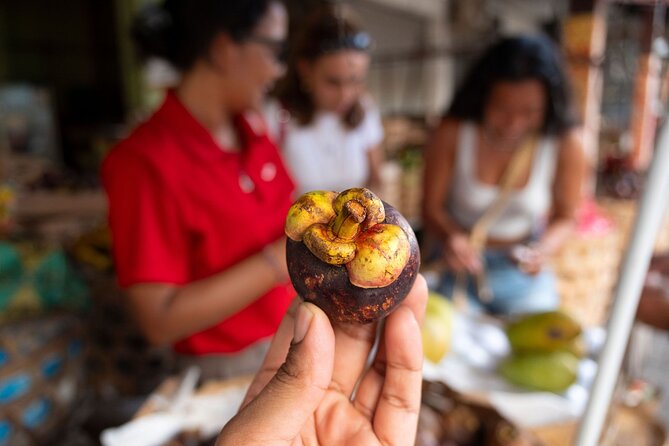
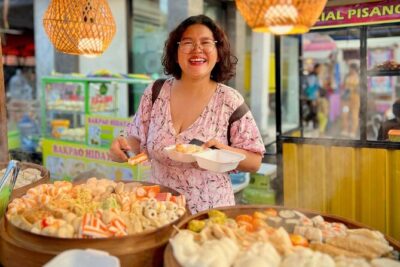
Badung Market is the heart of the food portion. Here you sample Jaje Bali, traditional Balinese sweets often made with rice flour, coconut, and palm sugar. Their colors and shapes vary, and the appeal is as much cultural as culinary.
This is the place to ask questions. If you are unsure how to choose a cake, what a particular texture means, or how locals eat it, let the guide help. Irfan has been praised for explaining how to choose kue and soup, and for introducing foods that might otherwise look unfamiliar or intimidating.
The market stop lasts about 30 minutes. You will have time to look around and taste selected items, but this is not a free hour to eat everything in sight. Additional food and drinks are not included, so bring a little extra money if you want to buy something beyond the planned tastings.
The market also helps explain the tour’s community angle. Your purchases are spread among four to six local stalls, and the vendors make their living from this trade. That does not turn the experience into a charity project, but it does give your food budget a more direct connection to small local businesses.
Finishing at Nadhi Heritage
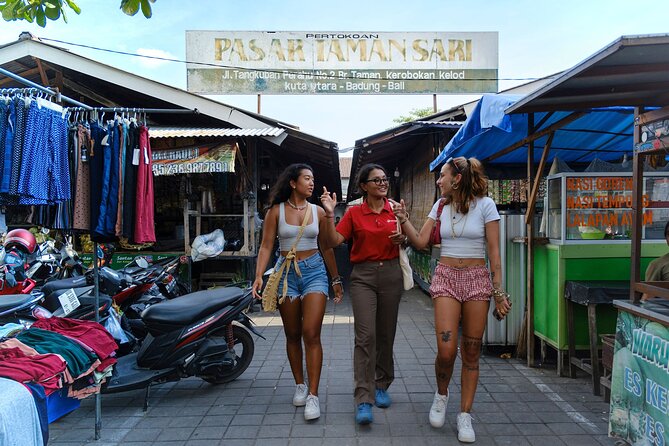
The final stop is Nadhi Heritage on Jalan Gajah Mada. You finish with Indonesian Arabica coffee, served hot or iced.
This is a welcome change of pace after the market. Coffee gives you time to sit, talk with your guide, and sort out the many flavors and stories from the walk. Indonesia produces several well-known coffee varieties, but this tour specifically promises Indonesian Arabica, not a named regional bean.
The stop lasts about 30 minutes. Since the tour ends here, you can continue exploring central Denpasar afterward or arrange your own ride back toward Seminyak. The meeting point and end point are different, so plan around that if you are using a taxi or ride service.
Timing, walking, and group size
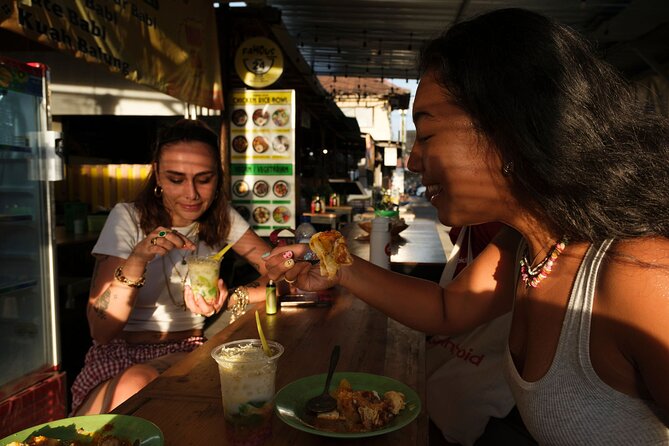
The tour runs for about three hours and begins at 4pm. That timing is practical in Bali’s heat. Much of the route is outdoors, and the later start should feel easier than a midday food walk.
You will walk between several stops, with the route moving through temple grounds, civic spaces, heritage streets, and market areas. Wear shoes that can handle uneven pavement and bring water, even though the main food focus comes later in the afternoon.
The maximum group size is 12. This is small enough for a guide to notice if you are confused by a dish or need an explanation repeated. It also makes the food stops easier to manage than a large group arriving all at once.
One past version of the experience included a short taxi ride near the end. Do not assume that transport is a standard included feature, since the supplied details describe the activity mainly as a walking tour. The stated starting point is Pura Agung Jagatnatha, and the listed end point is Nadhi Heritage.
Who should book this experience
I would choose this tour if you want more than a restaurant meal and are curious about Denpasar itself. It suits adults and older children who are comfortable with local food, street-market settings, and a fair amount of walking.
It is particularly useful early in a Bali trip. The guide can help you identify dishes, explain customs, and give you a sense of how Denpasar works beyond the beach districts. Lena has been described as easy to talk to, while Srix has been noted for explaining local customs and points of interest along the way.
The tour is also a good match if you prefer a small group. The 12-person limit offers personal attention without the cost of a fully private outing.
I would not book it if you need strict dietary control. Vegetarian, vegan, and gluten-free diets cannot be accommodated. Pork, meatball soup, traditional cakes, and local preparation methods are central to the route, and there are no children’s meals.
Children under six are not permitted. Older children may enjoy the colors and variety of the market, but the food is not adapted for young tastes.
Booking, cancellation, and practical value
The activity uses a mobile ticket, and confirmation is provided when you book. It is near public transportation, though you are responsible for reaching the starting point and arranging your onward journey from the end point.
Free cancellation is available up to 24 hours before the 4pm start time for a full refund. Cancellations or changes made within 24 hours are not refunded, so keep your timing firm once the day is close.
The tour is booked an average of 54 days ahead. That suggests you should reserve early if your Bali dates are fixed, especially if you want a particular evening.
At $45, I see the price as fair for the combination of food, history, and guiding, but not as a bargain meal. If you only want to eat Babi Guling and Bakso, go on your own. If you want help finding the right stalls, understanding why Babi Guling is significant, and connecting the food with Denpasar’s temples and history, the guided route earns its cost.
Should you book the Denpasar food tour?
Book it if you want a social, food-focused introduction to central Denpasar and you eat meat, pork, soup, sweets, and coffee. The best parts are the small group, the guide-led explanations, the locally purchased food, and the unusual chance to try a ceremonial-style dish in the setting of an ordinary city evening.
Skip it if you need vegetarian, vegan, or gluten-free food, dislike market-style eating, or want a relaxed restaurant dinner. For everyone else, this is a useful way to see the capital’s cultural center while putting real local dishes on your plate.
FAQ
Where does the tour start?
It starts at Pura Agung Jagatnatha, Jl. Surapati No. 7, Dangin Puri, Denpasar.
What time does the tour begin?
The tour starts at 4pm.
How long does the experience last?
It lasts approximately three hours.
Where does the tour end?
It ends at Nadhi Heritage at Jl. Gajah Mada No. 122, Denpasar.
What foods are included?
You taste Babi Guling, Bakso, Jaje Bali snacks, and street food at Badung Market. Indonesian Arabica coffee is served at Nadhi Heritage.
Is coffee included?
Yes. The tour includes authentic Indonesian Arabica coffee, served hot or iced.
Are extra food and drinks included?
No. Additional food and drinks are not included.
Can vegetarians or vegans join?
The tour cannot accommodate vegetarian or vegan diets.
Can people with gluten allergies join?
The tour cannot accommodate gluten allergies or intolerances.
How many people can join the tour?
The maximum group size is 12 people.
Are young children allowed?
Children under six are not permitted. The tour is intended for adults and older children, and children’s meals are not available.
Is cancellation free?
You can cancel up to 24 hours before the start time for a full refund. Cancellations within 24 hours are not refunded.
More Historical Tours in Bali
- Bali Unesco World Heritage Sites Tour (Private & All-Inclusive)
★ 5.0 · 91 reviews - Exquisite UNESCO World Heritage Sites in Bali
★ 5.0 · 9 reviews - Full-day Ubud Private tour : Cultural Heritage
★ 5.0 · 5 reviews - Ubud Cultural and Historical Guided Tour with Transfer
★ 5.0 · 4 reviews
Newest Bali write-ups
- Surf lesson | Energy surfschool krui★ 5.0 · 3 reviews
- Best of North Bali: Banyumala Waterfall, Handara Gate and Temple★ 5.0 · 4 reviews
- West Nusa Penida Island Snorkeling Tour – From Bali Island★ 4.0 · 5 reviews
- Uluwatu tour & Balinese kecak dance★ 5.0 · 3 reviews
- Sharing Mount Batur Sunrise Trekking And Natural Hot Spring★ 5.0 · 11 reviews
- Bali Parasailing Adventure, Jet Ski, Banana Boat , Donat Boat, with Transport★ 5.0 · 11 reviews
- Bali’s Spiritual Pillars – Uluwatu Temple and Kecak Dance Tour★ 5.0 · 6 reviews
- Uluwatu Temple & Kecak Fire Dance Show (Include All Tickets)★ 4.5 · 5 reviews
Denpasar City and Street Food Tours, compared.

Bali Full Day-Tour: Denpasar City and Uluwatu Sunset Tour
Read our review →
Browse the lists this tour appears in