
Reviewed · BALI TEMPLE TOURS
Bali Full-Day to Exploring The Most Popular Bali Temples Tour
Bali’s temple circuit packs five very different sacred sites into one long day, from the steep stairway at Kehen Temple to the purification pools at Tirta Empul and the ancient cave entrance at Goa Gajah. I like the private vehicle and flexible timing, and I like that every admission ticket, parking fee, petrol, and hotel pickup is covered. The drawback is simple: nine to ten hours on the road can feel full, especially when each temple gets about an hour.
The tour also includes the grand Besakih Temple, Bali’s Mother Temple, plus lunch in the Besakih area if you choose that option. Restoration work can change the plan, as happened when driver Ketut replaced Kehen with Ulu Petanu waterfall, so confirm the day’s route and dress for active walking and temple rules.
Key points at a glance
- Five major temple stops: Kehen, Besakih, Tirta Empul, Gunung Kawi Sebatu, and Goa Gajah each offer a different setting and religious purpose.
- Private from pickup to return: Only your party rides in the air-conditioned vehicle, with an English-speaking driver-guide.
- Besakih is the big centerpiece: Known as Bali’s Mother Temple, it gives the day its grandest religious setting.
- Sacred water is a recurring theme: Tirta Empul and Gunung Kawi Sebatu show two different sides of Bali’s water-temple tradition.
- Lunch depends on the option selected: The meal is described as a buffet in the included features, but it is not included with every booking.
- Build in flexibility: Kehen may be closed for restoration or other changes, and the driver can offer an alternative such as Ulu Petanu waterfall.
Five temples, five different windows onto Bali
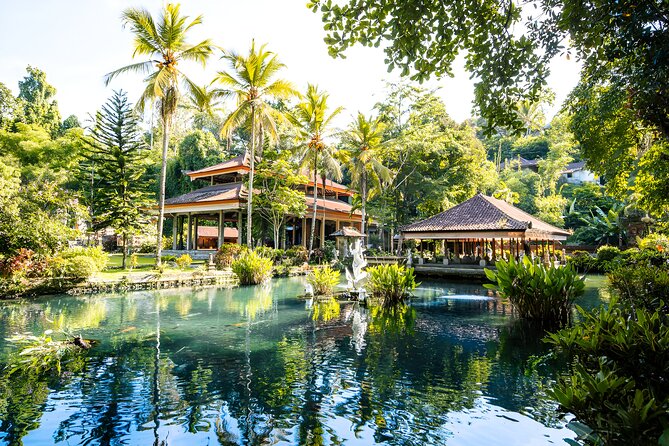
This is not a quick photo stop at one famous shrine. The route gives you a broad look at Balinese Hindu worship, old archaeological sites, temple water systems, village crafts, and the island’s northern and eastern interior.
You will spend about one hour at each main stop. That is enough time to look around, take photographs, hear an explanation, and get a feel for the place. It is not enough for a slow, detailed study of every courtyard, carving, and shrine. I would treat this as a well-organized introduction rather than a specialist temple tour.
The private format helps. You are not tied to a busload of strangers, and the timing can be adjusted around your group’s needs. The supplied information specifically allows flexible time arrangements on request. That matters in Bali, where road time can make a full-day schedule feel longer than the clock suggests.
More Bali temple days:
- Beratan , lake side temple tour , all inclusive
★ 5.0 · 261 reviews - Private Full-Day Tour: Ulun Danu Beratan Temple, Jatiluwih and Tanah Lot Temple
★ 5.0 · 211 reviews - All Inclusive Kecak Dance and Uluwatu Temple Admission Ticket
★ 4.5 · 127 reviews
Kehen Temple begins the day with a climb
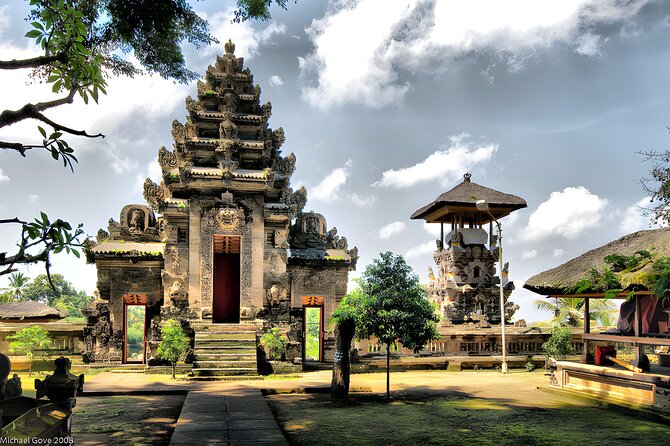
Kehen Temple is reached by a stone staircase with 38 steps, rising above a steep slope. That approach gives the visit a sense of arrival rather than dropping you straight beside the main building. At the temple, worshippers burn offerings on a small hearth, an everyday religious detail that makes the site more than a collection of pretty gates.
The temple is associated with Shiva, Brahma, and Vishnu, three major Hindu deities. You can expect a one-hour visit, with some walking and steps before you reach the entrance and inner areas.
There is one important qualification. Restoration work has already caused Kehen to be closed during at least one tour. On that occasion, driver Ketut offered Ulu Petanu waterfall as a replacement, and the substitute was described as a lovely stop. The lesson is practical: if Kehen is especially important to you, ask about its status before departure. If it is unavailable, a replacement stop may preserve the day’s variety, but it will change the religious focus.
Besakih gives the route its grandest stop
Besakih is known as Bali’s Mother Temple and has been revered for more than a thousand years. It is the largest and most important temple complex on this route, so the scheduled hour here may feel short.
I like the placement of Besakih in the middle of the day. After the more intimate opening stop, you reach a site with a much broader scale and a stronger sense of ceremony. The setting is also the reason lunch is arranged in the Besakih area when that option is selected.
The tour description does not give a detailed menu, but the meal is listed as a buffet. One especially useful detail is the report of good food and terrific scenery at the lunch site. That makes the break more than a basic refueling stop, though you should check the booking option carefully because lunch is not automatically included with every version of the tour.
Give yourself room to listen and look here. Besakih is not best treated as a quick stop for one photograph. The complex is the place where the spiritual scale of Bali’s temple tradition becomes clearest.
Tirta Empul explains Bali’s sacred water
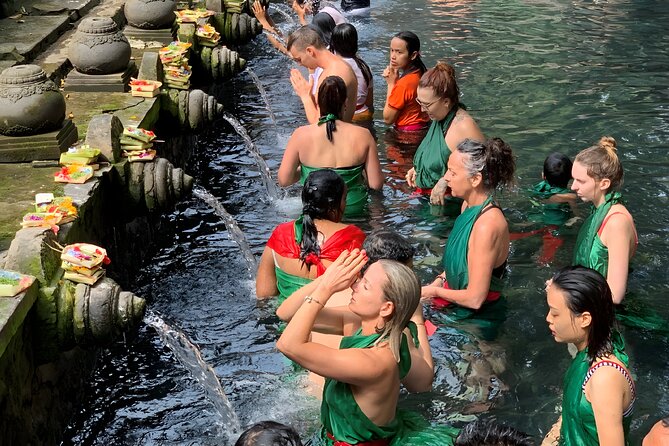
Tirta Empul means holy water spring, and the spring feeds purification baths, pools, and fish ponds around the temple. This is one of the most useful stops for understanding how water functions in Balinese Hindu practice.
You will have about an hour to see the temple and its water features. The purification pools are used in cleansing rituals, so behave respectfully around people taking part. The supplied details do not say that your tour includes a ritual or that you can enter the water, so do not assume either. Ask your driver or guide what is appropriate on the day.
This stop is also a good change of pace after Besakih. Instead of a large complex, you get a focused look at springs, bathing areas, and temple spaces organized around water. Bring sunscreen and a camera, both specifically recommended for the day, but keep your camera use considerate near worship.
More full-day trips in Bali:
- Bali Full-Day Traditional Village Sightseeing Trip All Inclusive
★ 5.0 · 3,069 reviews - Private Full-Day Tour: Discover The Best of Bali Destination
★ 5.0 · 186 reviews - Full Day All Inclusive South Bali Uluwatu Private Tour
★ 5.0 · 120 reviews - West Nusa Penida Full-Day Private Tour
★ 5.0 · 93 reviews
Gunung Kawi Sebatu is the quieter water temple
Gunung Kawi Sebatu is another Hindu water temple, dedicated to Vishnu, who is associated with water. The site sits in a dip in the land, surrounded on three sides by stone walls and on the fourth by a steep area.
That physical setting should make this visit feel different from Tirta Empul, even though both involve sacred water. Tirta Empul is known for its spring and purification baths, while Gunung Kawi Sebatu gives you a temple arranged within a more enclosed setting.
The scheduled hour is enough to appreciate the layout without turning the stop into a long walk. I would pay attention to how the site fits into the land rather than rushing from one photo point to the next. As with every temple on this day, modest dress matters. The stated dress code is smart casual, which is a useful minimum, but visitors should still dress respectfully for active religious sites.
Goa Gajah combines archaeology and temple worship
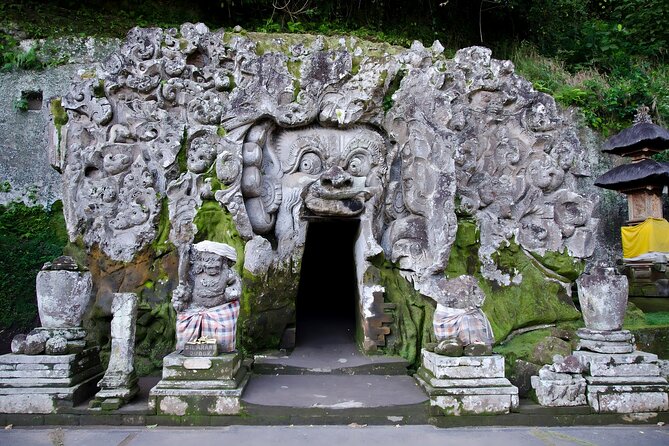
Goa Gajah, also called Elephant Cave, is an archaeological site on the western edge of Bedulu Village. It is one of Bali’s most popular places of interest and brings a different kind of history to the route.
The cave itself gives the stop its name, while the wider site has religious and archaeological importance. You will have about an hour here, enough to explore the main area and take photographs without needing to hurry through the entire visit.
Goa Gajah is a strong final temple stop because it rounds out the day. You have seen active worship, monumental temple grounds, water rituals, and now an old archaeological setting. Do not expect the same atmosphere at every stop. That variety is the tour’s main strength, but it also means the day moves quickly.
The drive adds a look at village life
Between the temples, you pass several kinds of local communities and working villages. The route may include a traditional village, a wood-carving village, a gold and silversmith village, and a hand-weaving village. You also pass a famous temple and other well-known places, though the supplied route does not name each one.
These drive-through sections are not presented as separate workshops or shopping visits. That distinction matters. You can watch the scenery and village activity from the vehicle, but you should not expect a hands-on craft lesson or a guaranteed stop at every place passed.
Still, these glimpses help connect the temples with everyday Bali. The island is not only a line of grand gates and sacred courtyards. Craft work, village communities, and religious buildings sit along the same roads. I like this part because it gives the long drive some purpose, even though the exact passing points may vary.
A private car changes the feel of a long day
The tour is private, meaning only your party shares the vehicle. You get an air-conditioned car, an English-speaking professional driver who also serves as your guide, and hotel or villa pickup and drop-off in the stated service area.
That arrangement is worth more than the word private might suggest. You can ask for explanations, adjust the pace, and discuss a replacement if a temple is closed. A group of two or three people will also avoid the stop-and-start routine that comes with collecting many separate parties.
The tradeoff is that your driver is described as a driver-guide, not necessarily a specialist historian or priest. You should expect practical guidance and explanations in English, but the depth of interpretation may depend on the individual guide. The experience with Ketut shows the value of a driver who can respond sensibly when the plan changes.
The tour lasts about nine to ten hours. That is a serious commitment, and the itinerary lists roughly five hours at the main temples alone. Road time, lunch, pickup, and return make up the rest. If you prefer slow mornings and long café breaks, this is probably too packed. If you want to cover several important sites in one day, the structure is efficient.
What the $90 price covers
At $90 per person, the value depends on the size of your party and on whether lunch is included in the option you select. The fee covers a private air-conditioned vehicle, an English-speaking driver-guide, all entrance tickets, petrol, parking, tax, services, and hotel or villa transfers in the service area.
That list removes several costs that can quietly add up on a temple day. You do not need to arrange separate transport between five sites, pay entrance fees at each gate, or negotiate parking and petrol costs along the way. For a small private group, those inclusions make the price easier to justify.
Lunch requires closer attention. The tour offers a buffet lunch if that option is selected, but the included features do not say that every booking contains it. Check the exact package before paying. Vegetarian food is available if requested when booking.
The tour is often booked about 42 days ahead. That does not mean you must book that early, but it suggests that planning ahead is sensible if you need a particular date, especially for a private vehicle.
Practical temple advice for the day
Dress in smart casual clothing and choose something respectful for Hindu temples. You will be walking and climbing steps, so practical clothes and comfortable footwear make sense. Kehen includes a 38-step stone staircase, and the full day includes repeated walking at five sites.
Bring sunscreen and a camera. The operator also notes that most people can participate, but the supplied information does not give detailed accessibility guidance for stairs, uneven ground, or temple approaches. If mobility is a concern, ask before booking, particularly because Kehen and the other sites may not be equally easy to navigate.
Keep your schedule flexible. The route can change because of restoration work or other conditions, and poor weather may lead to a different date or a full refund. The booking terms allow free cancellation up to 24 hours before the start time. Within 24 hours, the payment is not refunded, and changes are not accepted.
Who should book this temple tour?
I would choose this tour if you want a private, full-day introduction to several of Bali’s major religious and archaeological sites without arranging a car, guide, tickets, parking, and lunch separately.
It suits couples, families, and small groups that value control over the pace. It also works well for a first Bali visit when you want the broadest possible temple overview in one day. The private format is especially useful if one person in your party needs extra time or if you want to ask plenty of questions.
I would hesitate if you want a slow, single-temple experience, a specialist religious guide, or a schedule with lots of unscheduled time. Five temples in nine to ten hours is ambitious. Restoration work may also remove Kehen from the plan, so keep your expectations flexible.
Should you book it?
Book this tour if your priority is variety, convenience, and a private vehicle with major costs already handled. Besakih, Tirta Empul, Gunung Kawi Sebatu, and Goa Gajah give you four strong reasons to go even if Kehen is unavailable, while the village scenery adds context between stops.
Before confirming, check three things: the exact pickup area, whether your chosen price includes the buffet lunch, and the current condition of Kehen Temple. If those details suit you, the $90 price is a fair way to cover a demanding but worthwhile day of Bali’s temples.
FAQ
How long does the Bali temple tour last?
The tour lasts approximately 9 to 10 hours, including hotel or villa pickup and drop-off.
Is this a private tour?
Yes. Only your group participates, and no other participants share your vehicle.
Which temples are included?
The planned stops are Kehen Temple, Besakih Temple, Tirta Empul Temple, Gunung Kawi Sebatu Temple, and Goa Gajah, also called Elephant Cave.
Is hotel pickup available?
Yes. Pickup and drop-off are provided from hotels or villas in the stated service area.
Is lunch included?
A buffet lunch is included if you select the lunch option. Check the exact option at booking, since lunch is not listed as included for every booking.
Are entrance tickets included?
Yes. Entrance tickets for the listed stops are included.
Can I request vegetarian food?
Yes. A vegetarian option is available, but you should request it when booking.
What happens if bad weather or restoration work affects the tour?
If poor weather causes cancellation, you will be offered a different date or a full refund. Restoration work can also change the route. On one outing, Kehen Temple was replaced by Ulu Petanu waterfall because of restoration work.
Newest Bali write-ups
- Best of North Bali: Banyumala Waterfall, Handara Gate and Temple★ 5.0 · 4 reviews
- Surf lesson | Energy surfschool krui★ 5.0 · 3 reviews
- West Nusa Penida Island Snorkeling Tour – From Bali Island★ 4.0 · 5 reviews
- Uluwatu tour & Balinese kecak dance★ 5.0 · 3 reviews
- Sharing Mount Batur Sunrise Trekking And Natural Hot Spring★ 5.0 · 11 reviews
- Bali Parasailing Adventure, Jet Ski, Banana Boat , Donat Boat, with Transport★ 5.0 · 11 reviews
- Bali’s Spiritual Pillars – Uluwatu Temple and Kecak Dance Tour★ 5.0 · 6 reviews
- Uluwatu Temple & Kecak Fire Dance Show (Include All Tickets)★ 4.5 · 5 reviews
Bali Temple Tours, compared.

Beratan , lake side temple tour , all inclusive
Read our review →Private Full-Day Tour: Ulun Danu Beratan Temple, Jatiluwih and Tanah Lot Temple
Read our review →
All Inclusive Kecak Dance and Uluwatu Temple Admission Ticket
Read our review →

Ubud Private Tour: Monkey Forest, Rice Terrace, Temple, Waterfall
Read our review →
Tanah Lot Temple, Waterfall & Ubud Tour (Private & All-Inclusive)
Read our review →
CRETYA Ubud infinity Pool + Hidden Water fall + Water Temple Tour
Read our review →
Ancient Temples and Jatiluwih Rice Terrace Private Tour
Read our review →Browse the lists this tour appears in